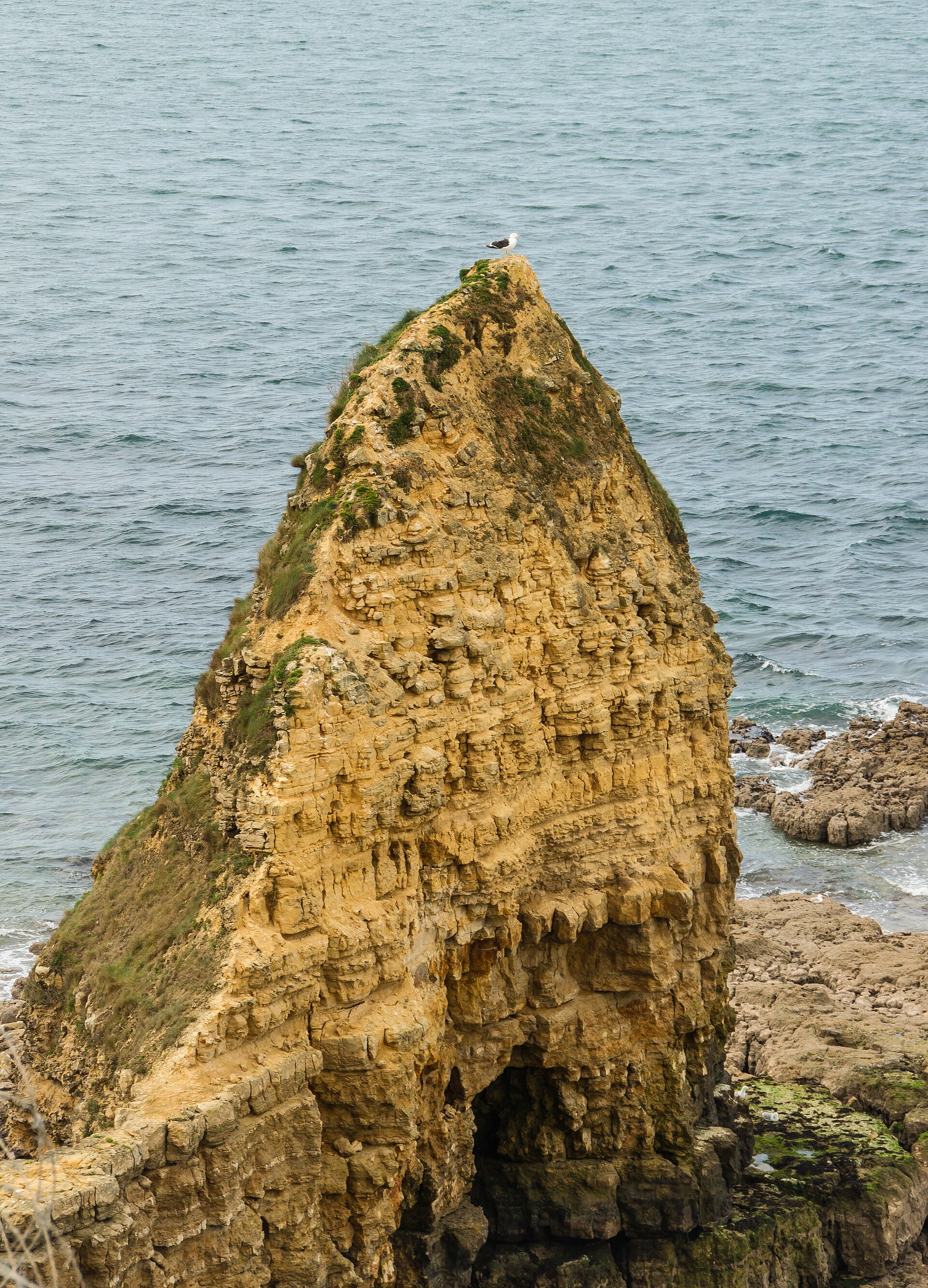
On 26 July 2026, in Busan, South Korea, the World Heritage Committee inscribed “Beaches of the D-Day Landings, Normandy, 1944” on its List. The property has six components along roughly 80 km of coastline: the beaches of Utah, Omaha, Gold, Juno and Sword, and Pointe du Hoc.
- Date
- Creator
- Source
- Rights
- Copyright
What the decision recognises
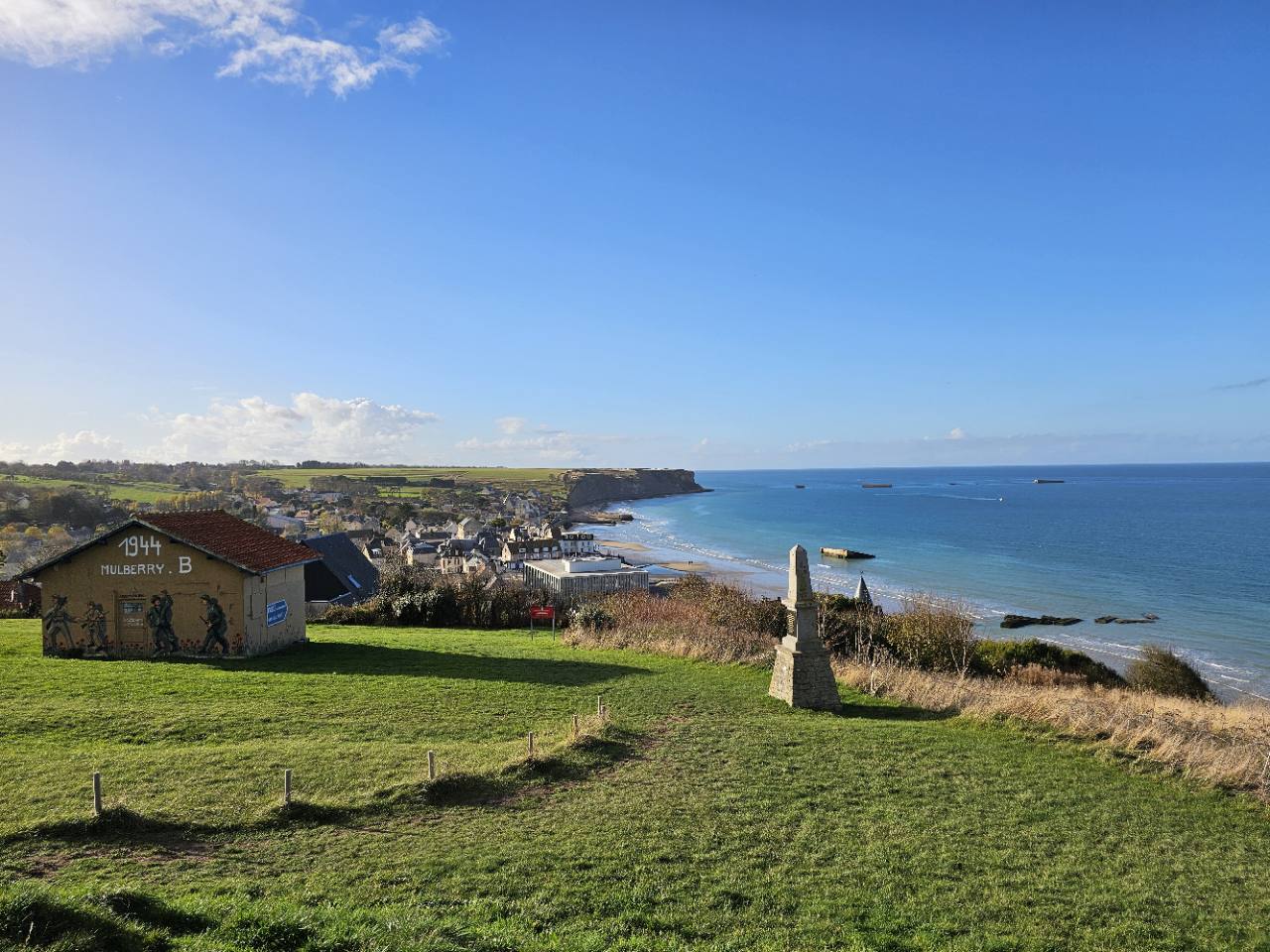
I learned to read these beaches by walking them, and this decision touches me in a specific way. What has always struck me is that the place does not tell its own story: you have to know where to look. The Committee relies on criterion (vi): these sites are memorial sites “directly and materially” associated with the Landings. The gun emplacements, batteries and traces of the battlefield are the witnesses. The property also keeps remains of the Mulberry B artificial harbour, in the Gold Beach sector.
What the inscription changes, and what it does not
An inscription adds no bunker and no sign. It recognises an outstanding universal value, and it commits those responsible to protect it. The UNESCO record itself notes that the natural retreat of the coastline threatens some of the elements. The Region, the State and the local authorities must now put a joint management plan into practice.
- Date
- 30 April 2015
- Creator
- Jebulon
- Source
- Wikimedia Commons
- Rights
- Public domain (CC0 1.0) — free reuse, including commercial, with no attribution required; author credit kept as a courtesy. Change: image resized to 1920 px wide.
- Copyright
- —

The places themselves are the same as they were before 26 July. What changes is how we look at them and how we pass them on. The regional press kit, moreover, describes these sites as places of “calm reflection”, around the ideals of freedom and peace. It is a sober phrase, and that is precisely why it seems right to me.
What it changes for people in Normandy
For people in Normandy, what changes first is a responsibility. The local authorities, associations and volunteers who have looked after these sites for decades see their work recognised, and their duties grow heavier. The last direct witnesses are disappearing. So it is a matter of passing things on, and doing it soon.
Sources
- Région Normandie, “Les Plages du Débarquement, Patrimoine mondial” (updated 19 August 2026, in French): https://www.normandie.fr/les-plages-du-debarquement-patrimoine-mondial
- UNESCO property record (in French): https://whc.unesco.org/fr/list/1581
- Committee decision 48 COM 8B.26 (in French): https://whc.unesco.org/fr/decisions/9180
- Press release from the Caen la mer urban community, 26 July 2026 (in French): https://caenlamer.fr/sites/caenlamer/files/2026-07/CP-Caenlamer-UNESCO.pdf